Yes, really.
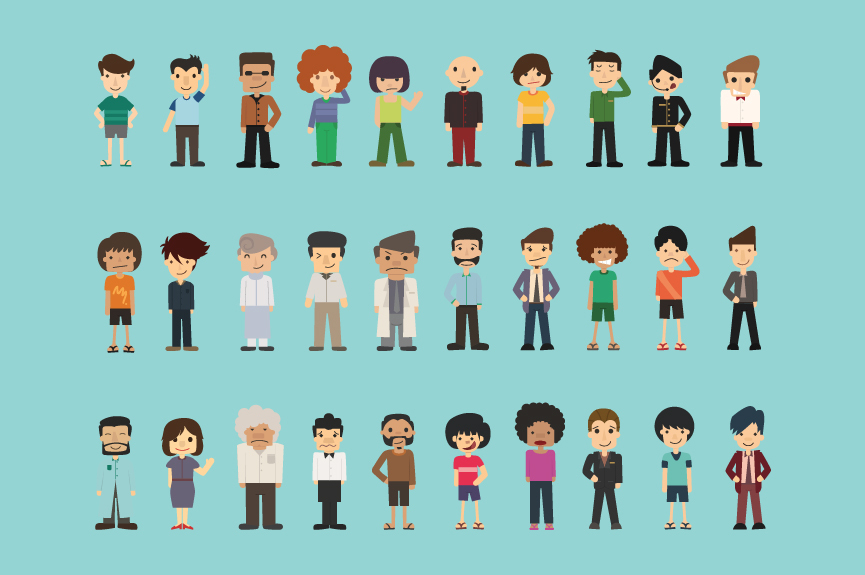
It’s in film, tv shows, newspapers. Heck, it’s part of what makes a person who they are… or is it? I’m here to explain my personal experience and how my monologue about stereotypes came to be.
What exactly is stereotyping?
Just before I get into how I made my monologue, here’s a video that could briefly explain or show you an example of the type of stereotyping I dived into.
The Beginning: Conceptualisation
The first thing I had to come up with was a topic. To do this, I thought about what topic I could deeply research into and flexible in terms of different ways I’d be able to perform it. There were quite a few ideas including the whole concept of life, why the world is so obsessed with social media, stereotypes or the idea of ‘drop-outs’ being considered as having no road ahead in life. However, this all boiled down to stereotypes, it’s a huge topic with many different types and it has the possibility of being performed in various ways be it through poetry, a speech of sorts or even a scenario that could be acted out. Saying that though, the deciding factor was me was that it was a topic I could relate to from past experiences. Specifically, racial stereotyping. Going for any of the other topics would be okay but I felt that if I could bring out the monologue from a personal perspective, I could make the overall performance impactful but also heartfelt for the audience.
The delivery
So the next thing to figure out was… How the hell am I going to deliver it? I started with a simple but effective technique. Spider diagram. Doing this helped me so much in listing the pros and cons of each method and seeing which one would suit me more. As I mentioned before, the topic of stereotypes can be performed in many ways be it through poetry or a speech. However, personality-wise, I decided to take on more of a comedic stand-up approach to it. This reason I chose this was because whilst keeping on topic I also wanted to remain being myself because if I forced a personality on a topic that I chose based on personal experience then, it would not be a performance that would be original to myself. Another reason is that, stereotypes are generally a part of comedy and generally, I feel that taking the comedic approach would capture the attention of the audience as I ease them into the darker side of stereotyping, delivering a bigger impact.
Research
Do you even research bro?
So here’s comes the boring… BUT ESSENTIAL part. After deciding on the topic which was stereotypes, I had to be more specific and I decided on racial stereotyping. However, the ‘throughline’ I set myself on was being singled out and marginalised by stereotyping. Before I added my story, I searched up other stories to see if it was still a relevant topic (if it was, it would add to the impact of my monologue).
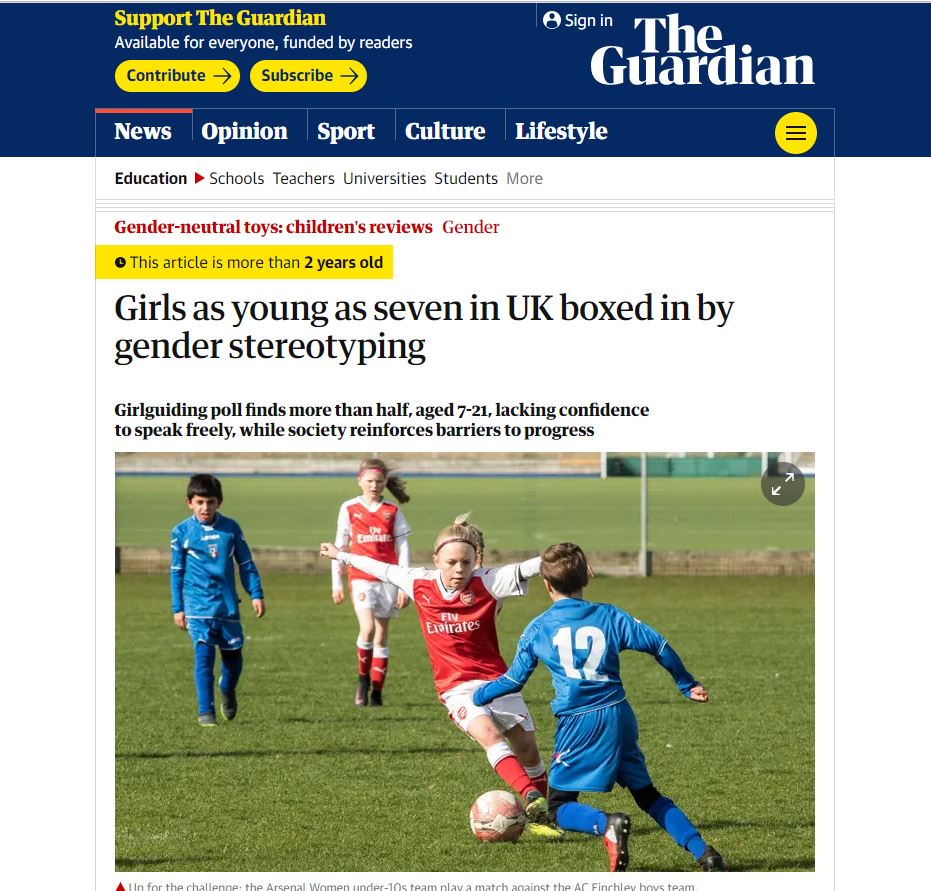
From my findings, I was shocked to find that there were so many cases of stereotyping going on in the world. One that particularly caught my eye was children as young as 7 were getting ‘boxed’ in by stereotypes. This was more than 3 years ago but it shows that it still occurs, it’s not racial stereotyping but stereotyping is what it is and will affect people the same.
You can read the article on https://www.theguardian.com/world/2017/sep/21/girls-seven-uk-boxed-in-by-gender-stereotyping-equality
Before I worried about how I could deliver my performance, I searched up other performers. Specifically, comedians, who have made similar jokes that I could use as a foundation to shape the arrangement of my script.
I’d say the comedian that stood out the most is the famous Bobby Lee, an american-asian comedian who’s been in the entertainment business for years, his jokes are very much so based on stereotypes so I decided to watch a few of his videos to see how I can play around with the racial stereotype before I get to the deeper side later on. One particular video that stood out to me is his “Asian Braveheart” because he uses typical stereotypes like the typical asian accent which would be a great base for punchlines and jokes I could add in the script.
The video was uploaded by “Comedy Works” where they upload clips of stand-up comedians performing at their venue.
My mediated asset: “To the Future Me”
Coming up with the video
Apart from the performance, I needed something to accompany it, just like how you’d have something that you can have with rice, like sweet and sour chicken. Performing a whole comedic/speech act wouldn’t be without it’s media.
I decided to brainstorm a few ideas. This involved… some more research. Seeing as I chose my topic because of personal experience I decided to make a video that is dedicated to the future me.. by me from the past. Initially, I was just going to create a small powerpoint that started off with curtains and my name up in lights as that is what the standard comedian uses as a backdrop. However, I didn’t think that was enough and I really wanted to make it more personal to make the monologue meaningful.
This was a process that required me to recall past events. How I felt at the time which wasn’t that difficult as it was a critical time in my life. The difficult part I would say, was how I actually was going to make the video because it is what I would believe is the cream of my crop as it is the hit of reality to the audience and what they would see as a ‘call for help’ from the younger me.
The relationship I wanted to show between the me before and the me now is that at the time, I didn’t feel like I could run to anyone about it because it was so normalised to be stereotyped that the only person I feel I could run to was ‘future me’ which in this case, was a camera.
Making the video and the performance
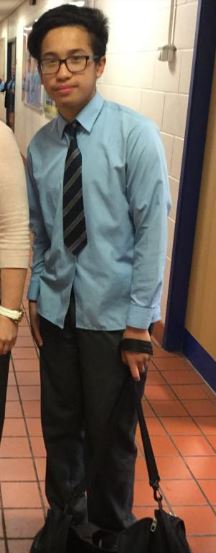
To begin with, I needed to somehow make myself look like my past self. Unfortunately, I had already thrown out my old school uniform however, it was possible for me to sweep my hair to the side and wear square-lensed glasses so all I had to do was wear a simple hoodie to cover up for the lack in uniform. Appearance wasn’t the only aspect I had considered. I also decided to use an older version of a phone instead of my usual phone as this would present a lower quality video which fits in with the fact that this was made some time ago.
As for the choreography and set of the video, it was quite simple as it was just a video of me talking to a camera in a setting where I would look like I was in my room, behaving in a secretive way as again, at the time I did not feel like I could run to anyone but myself about it. To set this mood for my scene, I had turned off the lights and just used a simple lamp to add the lighting of me being in the dark whilst making sure that I could be seen in the video instead of just completely being hidden in the dark. At the end of the video, I decided to add an abrupt ending where I edited my voice (imitating my mother) knocking on the door and the younger me suddenly leaving. This links in to the fact that I wanted to show that I really did not feel like I could run to anyone about this, including my own parent and therefore had to hide because I was ‘being too loud’. The performance for the video included a script. At the beginning, I had made it so that I broke down into the confession of being singled out straight away. However, I changed it to where I started it off being quite, happy in a way where I have that childish naivety of barely being able to contain my emotions with a happy introduction but breaking down almost immediately. I made this decision because it doesn’t just suddenly hit the viewer with a breakdown and instead gives the viewer time to empathise with the ‘past’ me in the video.
Planning the performance: Set and Script
My plan for the performance was quite simple as most comedians don’t really use much props for their stand-ups. It mainly consists of a stool, a microphone and a background with usually their name of it but in some cases, no background whatsoever just the wall of the venue and a spotlight. I followed along with this as I wanted the audience to mainly focus on me without much distractions to avert their eyes but not boring enough of a set to where they would have to stare at me all the time. However, I had to make a few changes as the space I had to perform it in was quite small. Therefore, there was no need for a mic as it would only have became an extra obstacle to walk around.
As for the script structure, I began it off with a simple introduction and due to me having a short time frame, I had to cut off quite a lot of parts. Firstly, I initially was going to talk a little about stereotypes because there are many kinds of it. Instead, I had made a small punchline to identify a stereotype in a nutshell but also to capture the attention of the viewer by starting it off with more of a light-hearted, comedic introduction. The original script had also quite a few jokes about other kinds of stereotypes such as religious stereotypes. However, these were cut off for mainly two reasons. One, they were not that relevant to my through-line of being singled out and two, adding the jokes would have shaved more time off my frame which was unnecessary.
The next parts were simply, my confession and my story of how I was singled out, followed by the ‘Future Me’ video which I felt would be appropriate to show as a means of ‘evidence’ of my experience. After this, I began what I would consider the most intense part of my speech where I mention the dark side of stereotyping. Before, I was going to end the monologue with just a simple farewell and thank you for listening. However, I decided to leave the audience with a question that relates to their thought process on stereotyping. The reason I did this was because I wanted to get the audience thinking, by getting them to think about it, the impact of my monologue would leave a mark on their mindset, making it slightly more memorable and would bring them back to the ‘cream’, the future me video which would affect them to empathise with the overall topic of the monologue, being singled out by stereotype.
The Performance
Personally, I feel that the performance had gone well. During performing it, I had used techniques such as using body language to add more of a volume to talking to the audience as well as making it seem a little more conversational as that would invite them in to listen, I had also paused at some points to give time for the words to sink in and to give time for the audience to react to what I was saying.
However, there are many things that I would have improved. Due to my short time frame, I felt that I had to rush a few of my words and I wished that I could have more time to elaborate on my experience with stereotyping.
If I were to be given another time to perform this, I would also look further in to stereotyping. Specifically, factors and history into it. Instead of it seeming to be boring, I would have somehow brought those facts and numbers into more of a light-hearted approach or more of an impactful approach for it to reach the audience’s thoughts.
If I were to have a big budget to perform this, I would rent out a theatre or a stage where I would be able to utilise the equipment, the spotlights and add soundtrack to my entrance as well as afford more time for me to be able really get my point across to my audience but also allow me to interact more with my audience so that they wouldn’t have to just sit there and listen but instead get involved with the performance.
There are many things I would improve about my performance but overall, I am quite happy about it as this monologue has allowed me to express my past experience and given me a chance to dive into the dark side of a topic that has played huge roles in comedy and in entertainment in general.
Thank you for reading! If you wish to head back up to the top simply click this arrow button.

 Stereotypes? Again?
